
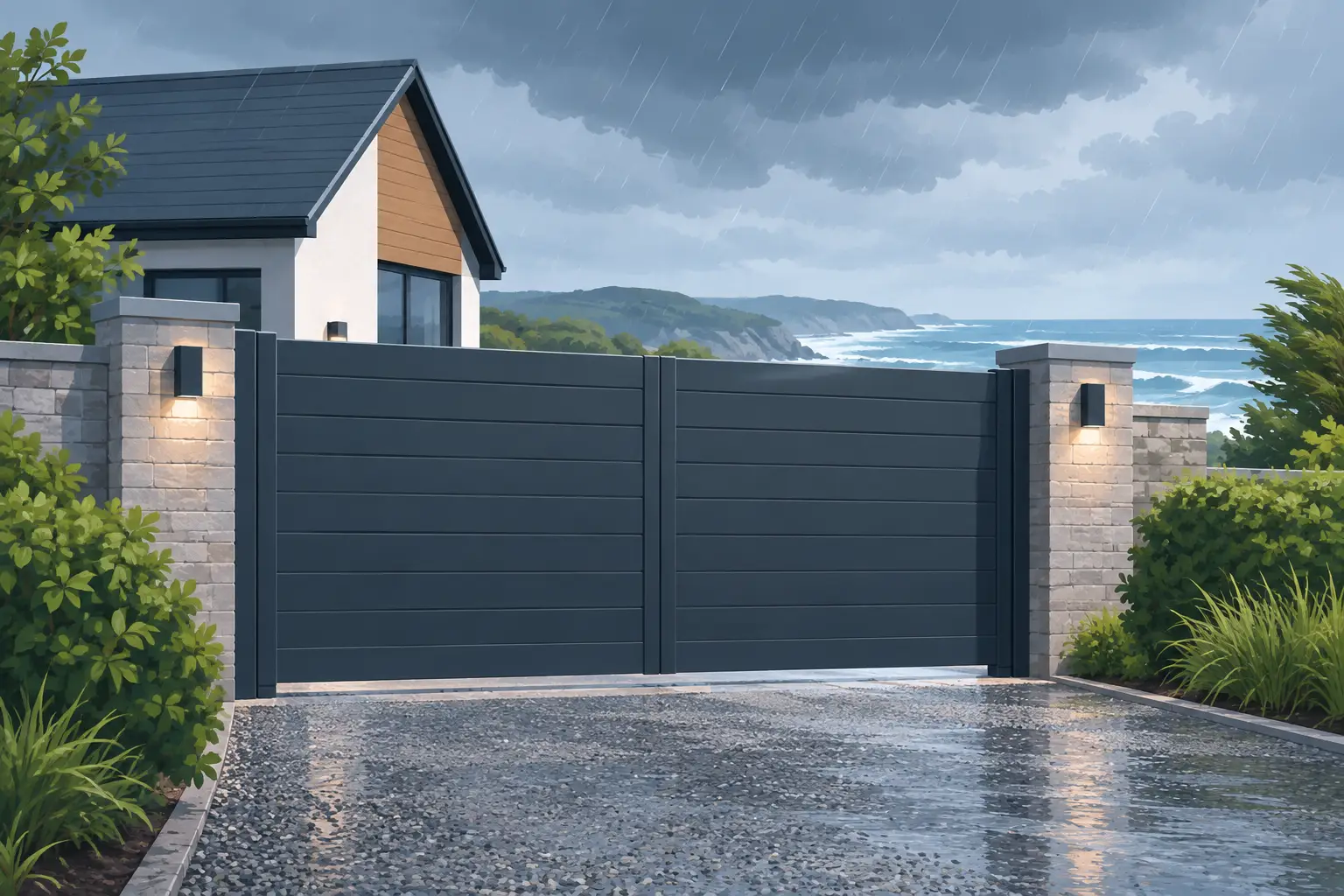
A driveway facing open fields, a coastal road or a hilltop does not experience weather in the same way as a sheltered suburban entrance. Wind-driven rain reaches hinges and posts, salt-laden air settles on surfaces, and standing water tests every fitting. Choosing weatherproof gates for exposed driveways means looking beyond the gate style and considering the complete installation: material, finish, ground conditions, drainage and automation all matter.
For many UK properties, aluminium provides the most practical balance of appearance, strength and low maintenance. It will not rot like timber or develop the widespread corrosion associated with untreated or poorly maintained steel. However, the right result still depends on correct specification and fitting. A well-made gate can only perform as intended when its posts, hinges, fixings and operating system are selected for the site.
Why exposed driveways need a different gate specification
An exposed driveway can be affected by more than rainfall. Persistent crosswinds put extra load on wide gate leaves. Frost and thaw can move poorly prepared ground. Surface water may run towards the entrance, while coastal conditions can speed up deterioration in unsuitable metals and fixings.
This does not mean every exposed entrance needs a commercial-grade system. The appropriate specification depends on the gate width, height, location and how often it will be used. A small pedestrian gate at a sheltered side entrance has very different demands from a pair of automated driveway gates opening across a windy rural approach.
The most common problems are not always visible on day one. Gates may begin to drop because posts were not properly founded, drainage may leave water around hinge points, or an automated gate may struggle when its leaves are repeatedly caught by strong gusts. Planning for these conditions before ordering is more cost-effective than altering the installation afterwards.
Aluminium weatherproof gates for exposed driveways
Aluminium is particularly well suited to exposed driveways because it is lightweight, strong and naturally resistant to corrosion. Unlike timber, it does not absorb moisture, swell or require regular staining. Unlike steel, it does not rely on a painted surface alone to prevent rust.
Quality aluminium gates are normally finished with a durable powder coating, available in a wide range of colours and wood-effect finishes. This coating gives the gate its finished appearance and adds further protection against rain, sunlight and everyday grime. For coastal or especially harsh locations, it is sensible to discuss the site when choosing the finish and fittings, rather than assuming any standard specification is identical.
Low maintenance should not be confused with no care at all. An aluminium gate benefits from an occasional wash using clean water and a mild, non-abrasive cleaner. This removes salt, dirt and organic deposits before they can affect the finish. Coastal homes and properties close to busy roads generally need cleaning more frequently than sheltered inland locations.
Choose a design that works with the wind
The visual design of the gate has a direct effect on how it handles wind. A fully solid gate offers privacy and a strong, contemporary frontage, but it also presents a larger surface area to gusts. On a very exposed site, this can increase pressure on hinges, posts and automation.
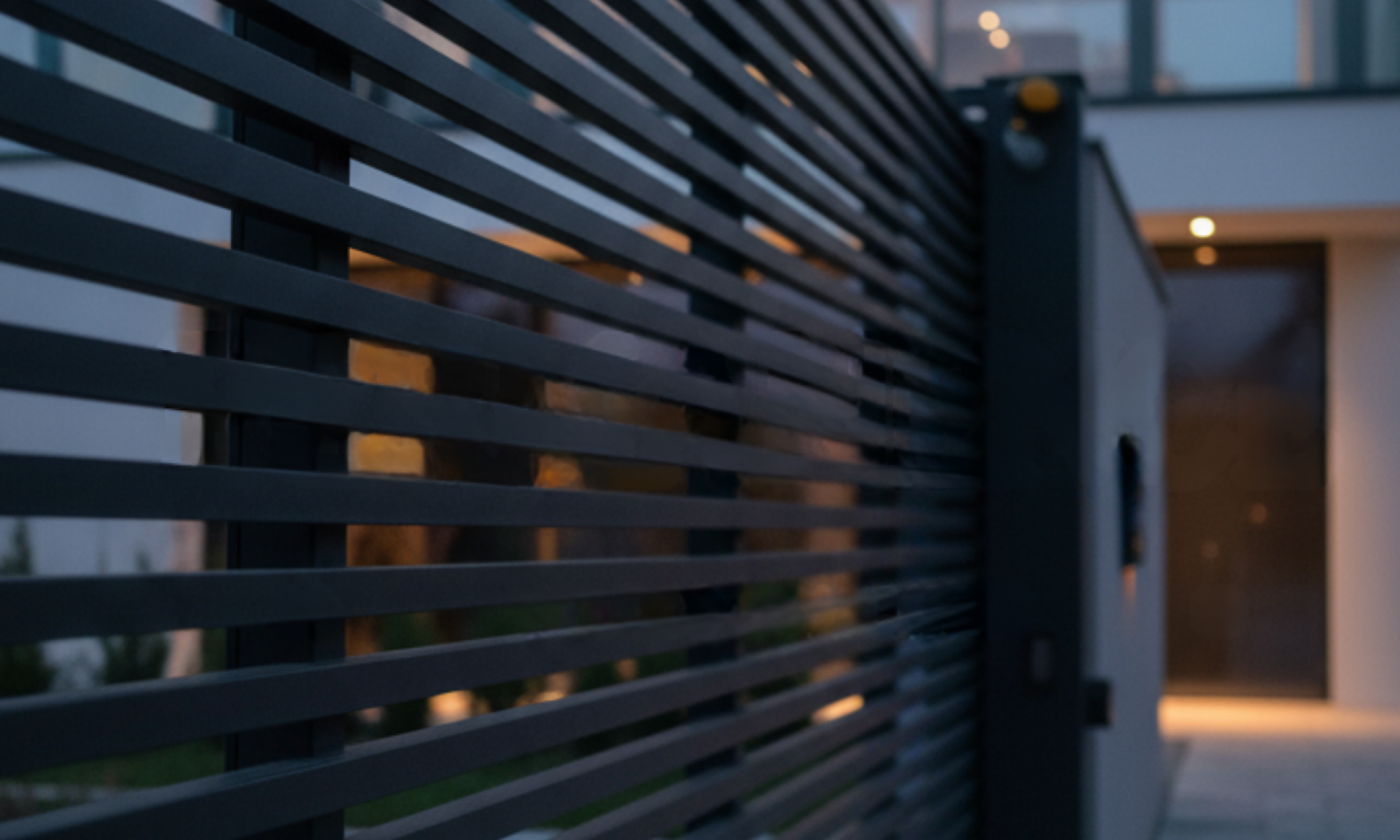
Slatted, spaced-board or partially open designs allow some air to pass through. They can be an excellent choice where wind is a concern, while still creating a smart and secure boundary. The ideal spacing is a balance: wider gaps reduce wind loading, but also reduce privacy and may alter the level of security required.
This is one reason bespoke aluminium gates are valuable. Rather than selecting a design solely from a photograph, homeowners and specifiers can adjust height, infill style, widths and opening arrangement to suit the driveway. A gate should complement the property, but it must also be comfortable to use throughout a wet and windy February.
Posts, foundations and drainage are part of the solution
A gate is only as dependable as the structure supporting it. For exposed driveways, posts must be appropriately sized for the gate leaves and securely fixed into suitable foundations. Ground conditions vary greatly across the UK, from firm compacted bases to soft ground, clay soils and sloping entrances. These conditions should be assessed before installation.
Adequate concrete foundations help keep posts stable through seasonal changes in the ground. On sloping driveways, the opening arc of a swing gate also needs careful consideration. It may be necessary to use rising hinges, alter the ground level or choose a sliding system, depending on the available space and gradient.
Drainage deserves equal attention. Water should not regularly pool at the base of posts or across the gate’s travel path. A channel drain, correctly formed falls or local groundworks may be needed to carry water away. This protects the entrance surface, reduces winter icing and helps prevent debris from building up where gates close.
Use corrosion-resistant hinges, brackets and fixings that are suitable for the location. This is particularly relevant near the coast, where standard fittings can deteriorate faster than expected. It is worth specifying the complete system as a package, rather than investing in a high-quality gate and compromising on the components that make it operate.
Swing or sliding gates: which suits an exposed entrance?
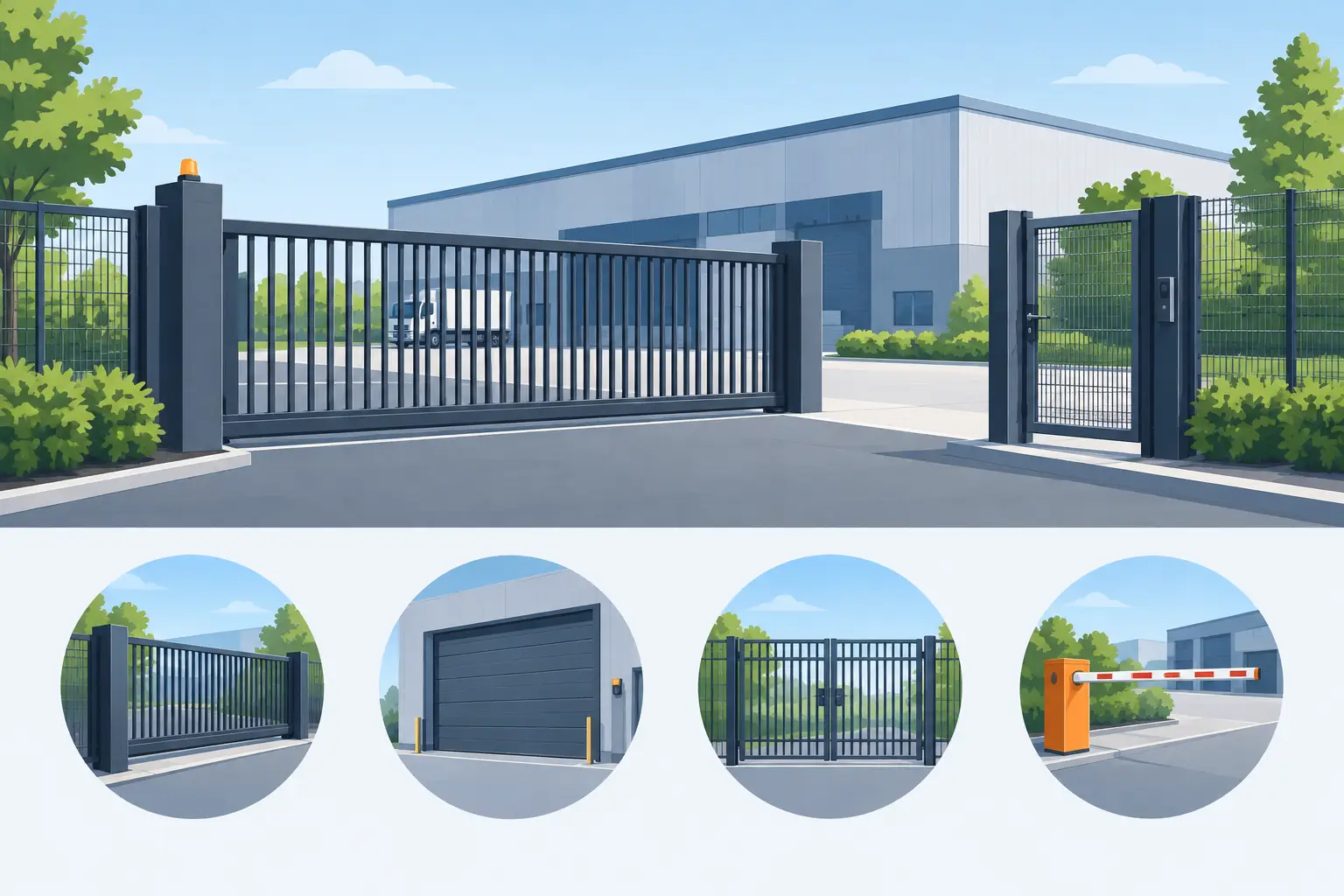
Swing gates remain a popular option for driveways because they create a traditional, welcoming entrance and can suit many property styles. They are often straightforward to automate, but they require clear space for the leaves to open. On an exposed site, the gate size, wind loading and hinge arrangement need to be considered carefully.
Sliding gates are often a strong alternative where space is limited, the driveway slopes upwards behind the gate, or large swing leaves would be vulnerable to wind. A sliding gate moves parallel to the boundary rather than opening into the driveway. It does, however, need sufficient run-back space along the fence line and a properly prepared track or cantilever system.
Neither arrangement is automatically better. A pair of well-specified swing gates may be the right answer for a level driveway with generous opening space. A sliding gate may offer more practical operation on a busy, constrained or windswept entrance. The best choice follows a site assessment, not a one-size-fits-all rule.
Automation needs weather protection too
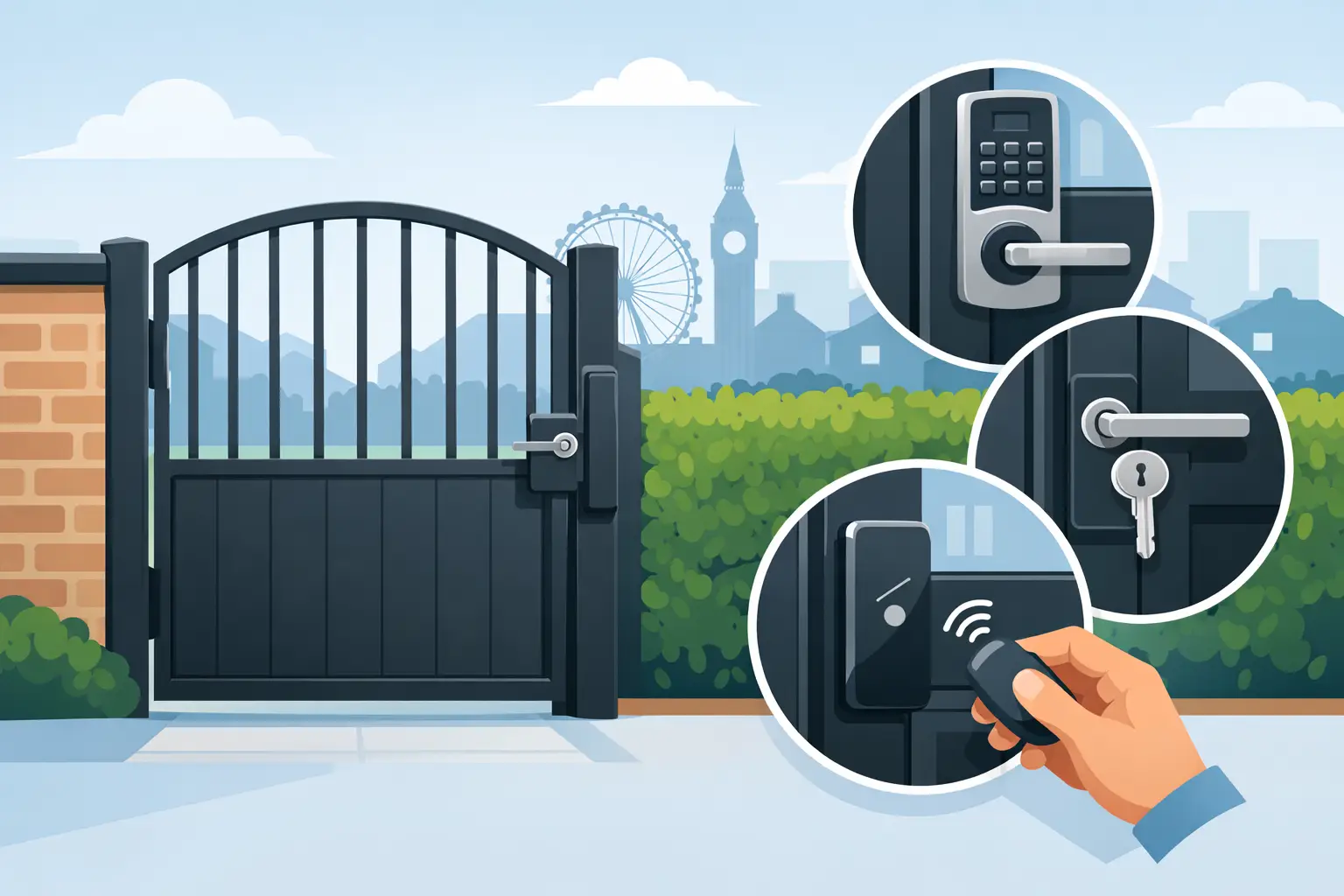
Automation can make a driveway entrance safer and more convenient, especially in poor weather. There is a considerable difference between stepping out of the car in heavy rain and operating a gate from a remote control, keypad or intercom. Yet automated gates require careful design on exposed sites.
Motors, control equipment and cabling should be selected and installed for outdoor use, with enclosures positioned to avoid unnecessary water exposure. Good cable routing, protected electrical connections and appropriate drainage around underground elements are essential. The system should also include suitable safety measures, such as photocells and obstacle detection, correctly set up by a competent installer.
Wind pressure matters for automated swing gates. An installer can advise on motor capacity, stop positions and whether a particular leaf size or solid design is appropriate. For high-use entrances, access control can be integrated with keypads, vehicle controls or an Akuvox intercom system, allowing visitors to be managed without compromising everyday convenience.
Automation should always be installed with future servicing in mind. Ask where the controls will be located, how manual release works during a power cut, and what routine checks are recommended. These practical details make a significant difference when the weather is at its worst.
Appearance, security and maintenance in one decision
Weather resistance does not mean settling for an industrial-looking entrance. Aluminium gates are available in modern horizontal slats, vertical profiles, solid panels, decorative detailing and wood-effect finishes. Matching aluminium fencing, railings or side gates can give an exposed driveway a considered, finished appearance while creating a consistent perimeter.
Security is best approached as part of the whole entrance. Gate height, visibility, locking, access control, boundary layout and lighting may all influence the right design. A completely solid gate can increase privacy, while a more open style may improve sightlines at a road entrance. For properties with poor visibility when exiting, this is a safety consideration as much as a design preference.
For homeowners wanting minimal upkeep, aluminium is a sensible long-term choice. Periodic cleaning, checking hinges and keeping the opening path clear are usually all that is required. Automated systems should be serviced in line with the installer’s guidance, particularly where the gate receives frequent use.
Getting the specification right before you order
Before selecting a gate, measure the clear opening, check driveway levels and identify where the gate can open or slide back. Take note of prevailing wind, nearby trees, surface-water routes and whether large vehicles need access. If automation is planned, consider power supply and how visitors will use the entrance.
It also helps to be clear about priorities. If privacy is essential, a more enclosed design may be right, with posts and automation specified to manage its wind loading. If the location is extremely exposed, a slatted design may be the more practical choice. Readymade gates can suit standard openings and quicker projects, while bespoke gates offer greater flexibility for unusual widths, slopes and architectural requirements.
Aluminium Gates Direct can help customers compare these options, from ready-to-delivery driveway gates to made-to-measure designs, with nationwide installation support available through trusted partners. A clear conversation about the property conditions at the outset helps avoid unsuitable choices and keeps pricing transparent.
A gate for an exposed driveway should feel reassuring every time it opens: stable in the wind, dependable in the rain and still smart enough to improve the approach to your property for years to come. Start with the conditions on site, then choose the design and system built to meet them.